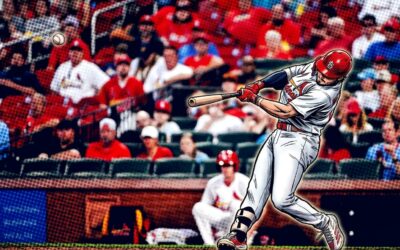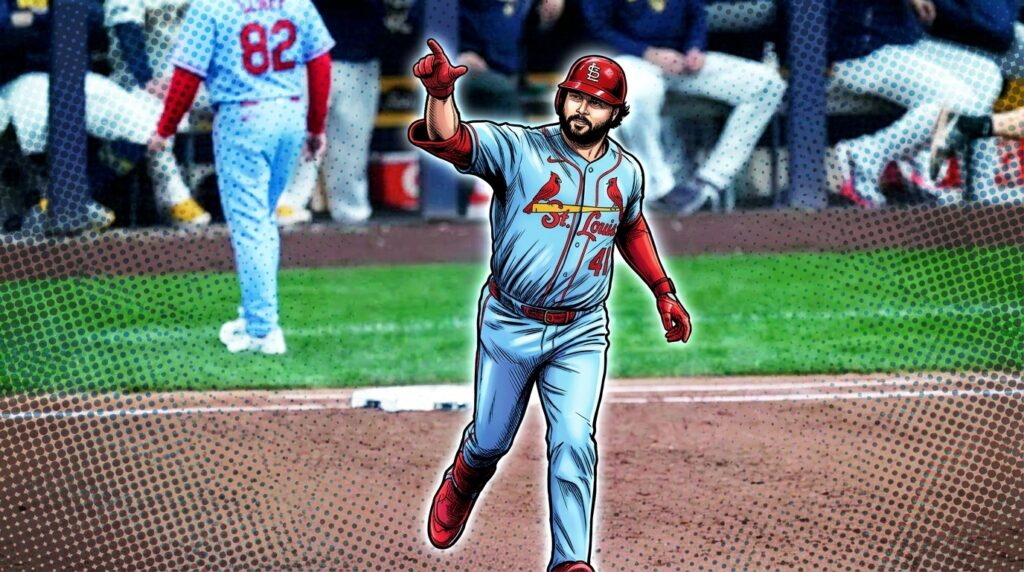
Fifty-five years. That’s how long it took for a Cardinal to lead all of Major League Baseball in RBIs by himself, and when it finally happened again in 2026, it wasn’t Albert Pujols or Stan Musial doing it. It was Alec Burleson, a guy who spent parts of three seasons bouncing between the outfield and first base while the organization figured out if he belonged. He finished with 116, ahead of Pete Alonso and Sal Stewart, the first Cardinal to top the league outright since Joe Torre drove in 137 back in 1971.
Pujols played twenty years in St. Louis and never led the league outright. Burleson got there in his third full season.
Third full season. Not year twenty.
The temptation is to treat that stat as a nice footnote on a lost season, and St. Louis fans have every right to be sick of nice footnotes. “Building blocks” has been the October refrain in this town for three straight years now, usually attached to a last-place finish and a shrug about next year. But Burleson’s RBI crown is real in a way no projection or scouting report could be: it’s the stat sheet, final, with his name at the very top of the sport.
Jordan Walker gave the rebuild its highlight reel. He hit .269/.327/.466 with 29 home runs, made the All-Star team, and won the Home Run Derby at 24 years old. Walker’s Home Run Derby victory was the first in franchise history, and for one July week it felt like the kind of moment a fan base builds a whole decade around. Then September happened. Hip pain that had been quietly compounding since spring training caught up to him, and he hit .172/.232/.287 down the stretch, a collapse steep enough to make you wonder how real the first four months actually were.
Both of those things happened. The Derby trophy is real; so is the .172.
So is the record: 77-85, last in the NL Central, well behind a Brewers team that won 103 games. St. Louis was quietly alive in the wild card race earlier this summer before fading, and that stretch is worth remembering precisely because it shows the gap here isn’t talent: it’s depth, and health, and roster completeness that two breakout seasons can’t cover by themselves.
Chaim Bloom isn’t promising to fix that gap this winter, and he shouldn’t be. “We’re going to look around, but we’re also going to be strategic. We’re not going to make a splash just to make a splash,” Bloom told reporters when asked about the offseason approach. He’s also acknowledged a “long-term vacancy at third base,” with Japanese infielder Teruaki Sato among the names being floated as a fit — exploratory, not a deal, not yet anything a fan should bank on.
What Bloom did say, bluntly, is that the organization can’t relax into these numbers. “We need to be careful about growing complacent or getting too comfortable with how far we’ve come,” he said in a separate session, which is as close as a front office executive gets to admitting the fan base’s frustration is correct. The Cardinals even flirted with real contention before the fade, which sharpens an obvious question: did Bloom play it too conservatively at the deadline? That debate isn’t going away just because Burleson had a historic year.
The Cardinals posted this on the day the RBI race officially closed:
Your 2026 RBI leaders! pic.twitter.com/5Iui4UbIVT
— MLB (@MLB) September 28, 2026
Pujols couldn’t do what Burleson just did. That’s not a reason to relax about third base, the bullpen, or anything else Bloom still has to solve this winter. It’s just the one part of 2026 that doesn’t need an asterisk.